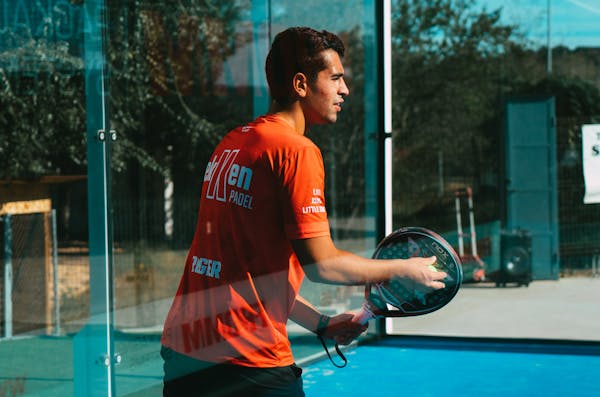

Padel research consistently points to a handful of body areas that take the most strain: the shoulder (from repeated overhead and serve-style motions), the wrist and forearm (from off-center hits and vibration through a stringless racket), and the lower body — ankles, knees, lower back — from the sport's constant sprints, lunges and direction changes. None of that is a reason to worry. It's a reason to warm up properly, because most of it is preventable.
Why the warm-up matters more in padel
Padel is a stop-start sport: short, explosive bursts of movement followed by brief recovery, repeated for the length of a match. That profile — sudden acceleration, sudden direction change, and a lot of overhead arm action — is exactly the kind of physical demand that a cold, unprepared body handles badly. Mental fatigue also builds over the course of a session, and fatigued muscles are slower to react, which is part of why injuries cluster later in matches and tournaments rather than at the very start.
A warm-up routine that actually works
A good pre-padel warm-up covers three things in order: raise your heart rate, mobilize the joints you're about to load, and prime the specific swinging motion you're about to repeat dozens of times.
- 2–3 minutes of light movement — jogging on the spot, side steps, or a lap of the court to raise your core temperature
- Dynamic mobility for shoulders and wrists — arm circles, wrist rotations, and a few slow, controlled practice swings
- Ankle and hip mobility — lateral lunges and ankle rolls, since padel's sideways movement loads these joints differently than running
- Swing-specific activation — this is where a weighted training tool earns its place: swinging against light resistance teaches your shoulder and core the exact motion pattern you're about to use, at match intensity, before you're actually under match pressure
How a weighted swing tool fits in
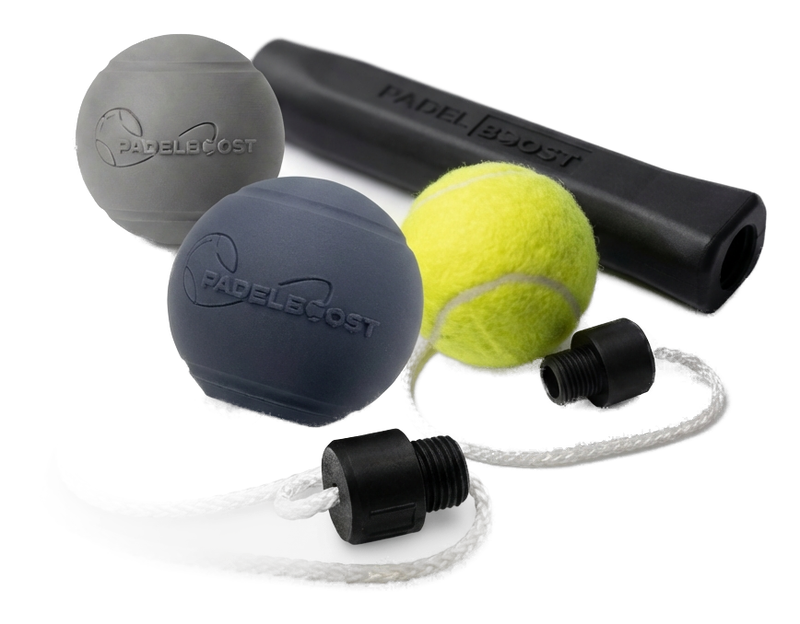
This is precisely the gap PadelBoost is built to close. Instead of loose arm swings with no feedback, a weighted ball on a cord gives your shoulder, forearm and core real resistance to work against — the same muscles, the same swing path, the same rotation you'll use on court, just primed and activated beforehand. Fifteen minutes with PadelBoost before you play does the job of a proper dynamic warm-up in a fraction of the space, and it travels in a bag.
Don't skip the transition back to your racket
One detail players often miss: after training with resistance, your actual racket will feel noticeably lighter. Take 10–20 easy shots or serves without full power before you play at match intensity — that "light hand" feeling is the point, but your timing needs a minute to recalibrate to the lighter weight.
Want the full training breakdown?
This warm-up is one piece of a bigger picture. For technique, grip, positioning and a complete training progression from first swing to match-ready, read our full guide on how to play padel from basics to pro-level preparation.