Padel and pickleball are the two racket sports everyone's suddenly talking about — and because they sound similar and both took off around the same time, people constantly mix them up. They're genuinely different games, though, with different courts, different equipment and a different feel. Here's the honest comparison.
Court and setting
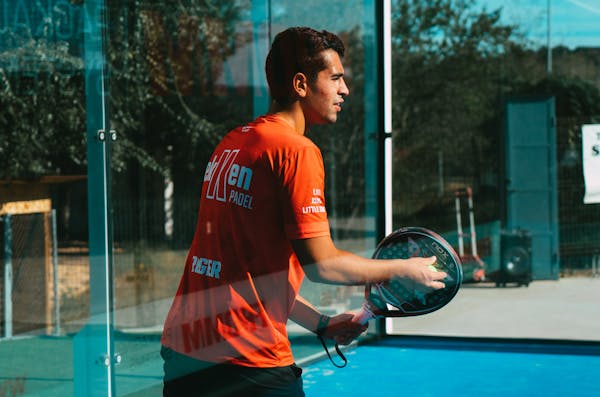
A padel court is enclosed by glass and mesh walls, roughly a third the size of a tennis court, and the ball is meant to bounce off those walls — it's built into the tactics. A pickleball court is open, about the size of a badminton court, with a low net and no walls in play. If you like the idea of using walls and rebounds strategically, padel has that built in; pickleball is a flatter, more open game.
Equipment
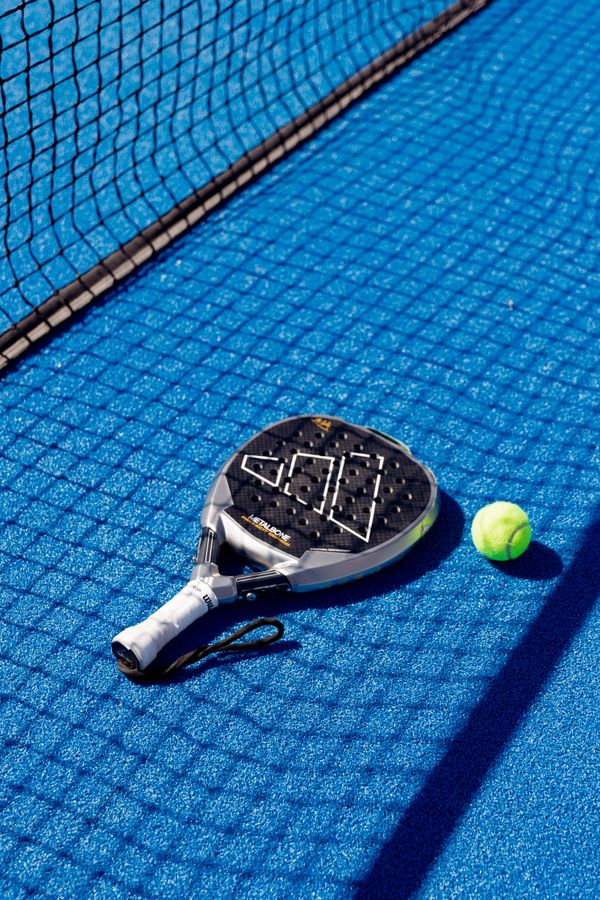
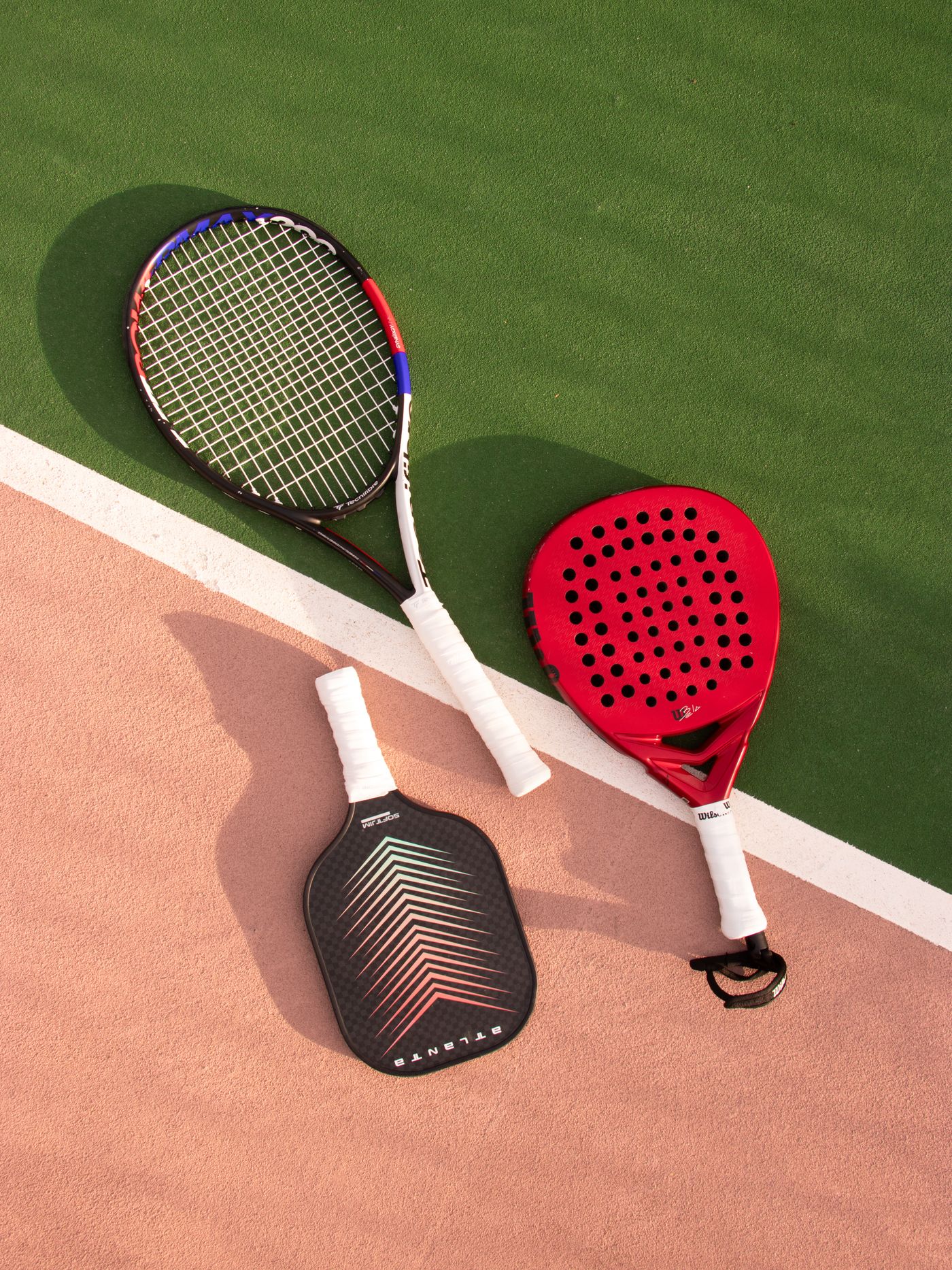
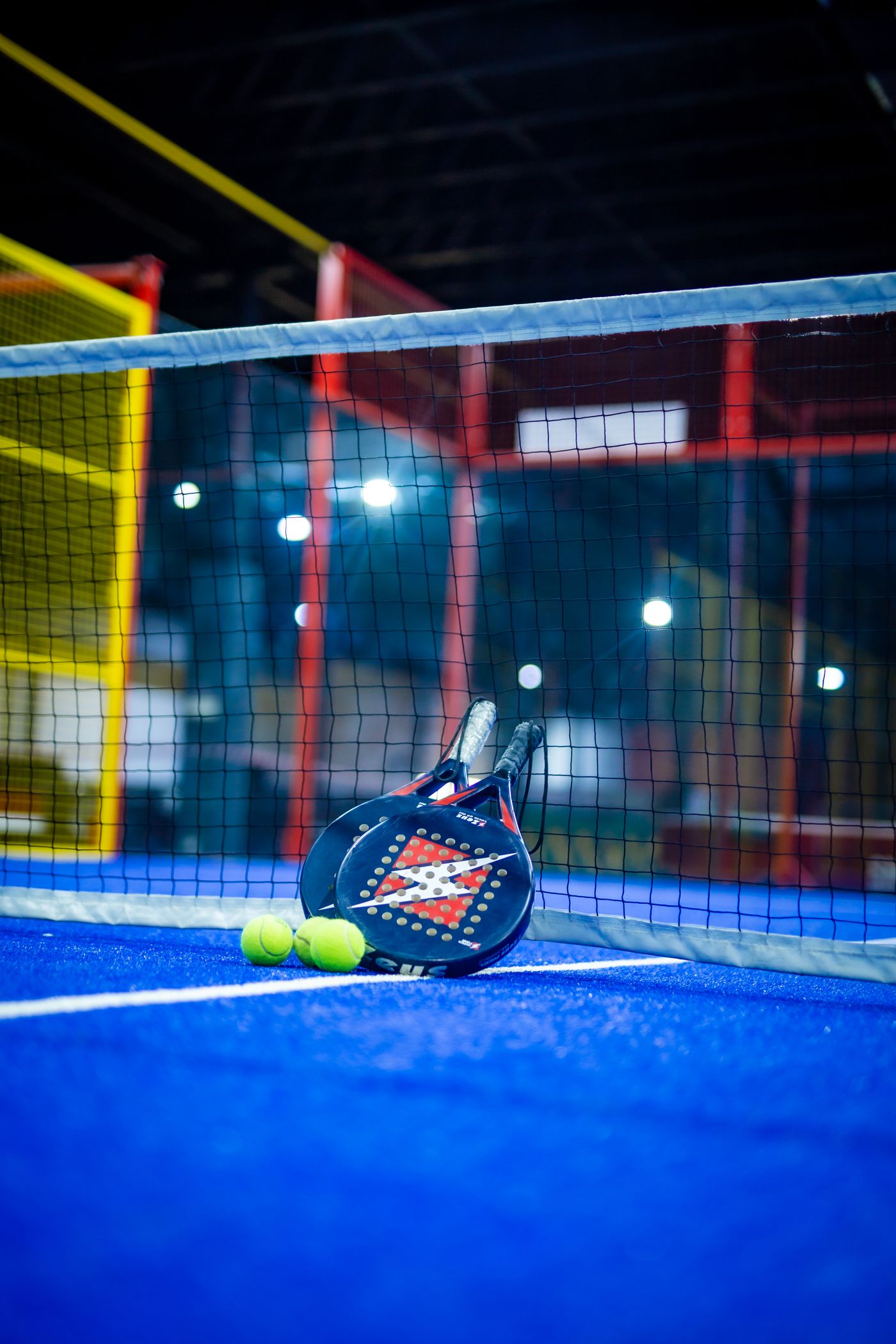
Padel rackets are solid and stringless, perforated with holes, used with a low-compression tennis-style ball. Pickleball paddles are solid, smaller, and paddle-shaped — closer to an oversized ping-pong paddle — used with a lightweight perforated plastic ball, similar to a wiffle ball. Neither sport needs strings, which makes both cheaper to maintain than tennis over time.
Scoring
Padel uses tennis-style scoring — 15, 30, 40, game — with sets and best-of-three matches, almost always played in doubles. Pickleball uses its own system: games are played to 11 points, and only the serving side can score, which changes the rhythm of a match considerably. Pickleball can be played in singles or doubles; padel is doubles nearly all the time.
Intensity and physical demand
Padel tends to be the more physically intense of the two — points involve more running, wall play adds extra movement, and rallies often last longer. Pickleball is gentler on the joints and easier to sustain at a casual pace, which is part of why it's become so popular with older players and mixed-age groups. Neither sport is as physically demanding as full-court tennis, which is exactly why both have grown so fast among people who want a serious workout without tennis-level wear on the body.
Learning curve
Pickleball is widely considered one of the easiest racket sports to pick up — most beginners are playing real points within their first session. Padel has a slightly steeper curve, mainly because of wall play and positioning, but it's still far more accessible than tennis; most players are rallying comfortably within a few sessions too.
So which one should you play?
If you want a fast, tactical, doubles-focused sport with a social club scene and don't mind a bit more running, padel is the better fit. If you want the gentlest possible entry point into racket sports, something you can play with almost anyone at almost any age, pickleball wins. Plenty of players end up doing both — the skills cross over more than you'd expect. Either way, a short resistance warm-up before you play measurably improves your first few points; see our guide on how to play padel for the full training breakdown.